

Vehicle stuck in the mud – Courtesy American history.si.edu
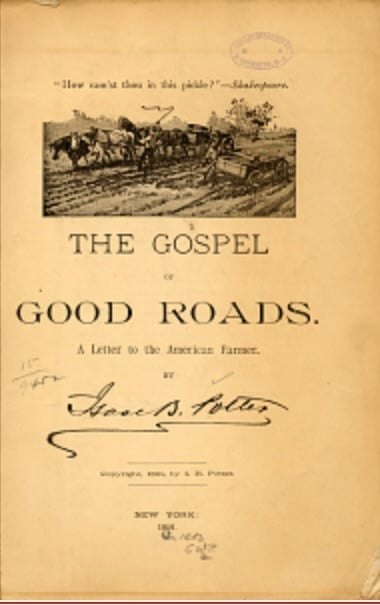
Pamphlet describing the need for road improvements – Courtesy Americanhistory.si.edu
Around 1900 if the road was in excellent condition, and the team of horses were as well, a stage could make the trip to Traverse City leaving Northport at 6AM, Omena at 7, and Sutton’s Bay at 8:15 and arrive at 11AM. Sometimes there was a lot of dust making it hard to see what was coming. There were no traffic laws, but the stage driver put a little bell on the neck yoke of the horses that could be heard for a quarter of a mile so people knew he was “a-coming”. The roads were rough, however, and the faster they traveled the bouncier the ride.
One time, according to Mr. Bahle who was bringing his second wife to Sutton’s Bay in the stage, they made the trip from Traverse City to Sutton’s Bay in a little less than 2 hours. (15 miles), the quickest ever. “There were fourteen passengers squeezed into the stage, among them a teacher, Mrs. Mork, who got seasick and emptied her stomach in the brides lap.”
About 4 miles south of Northport there was once a “plank Road” which lumbermen and farmers used as well as Omena residents. It, no doubt, was smoother than Corduroy roads made from logs laid side by side across the road, which was an improvement over mud roads.
1912 Ford
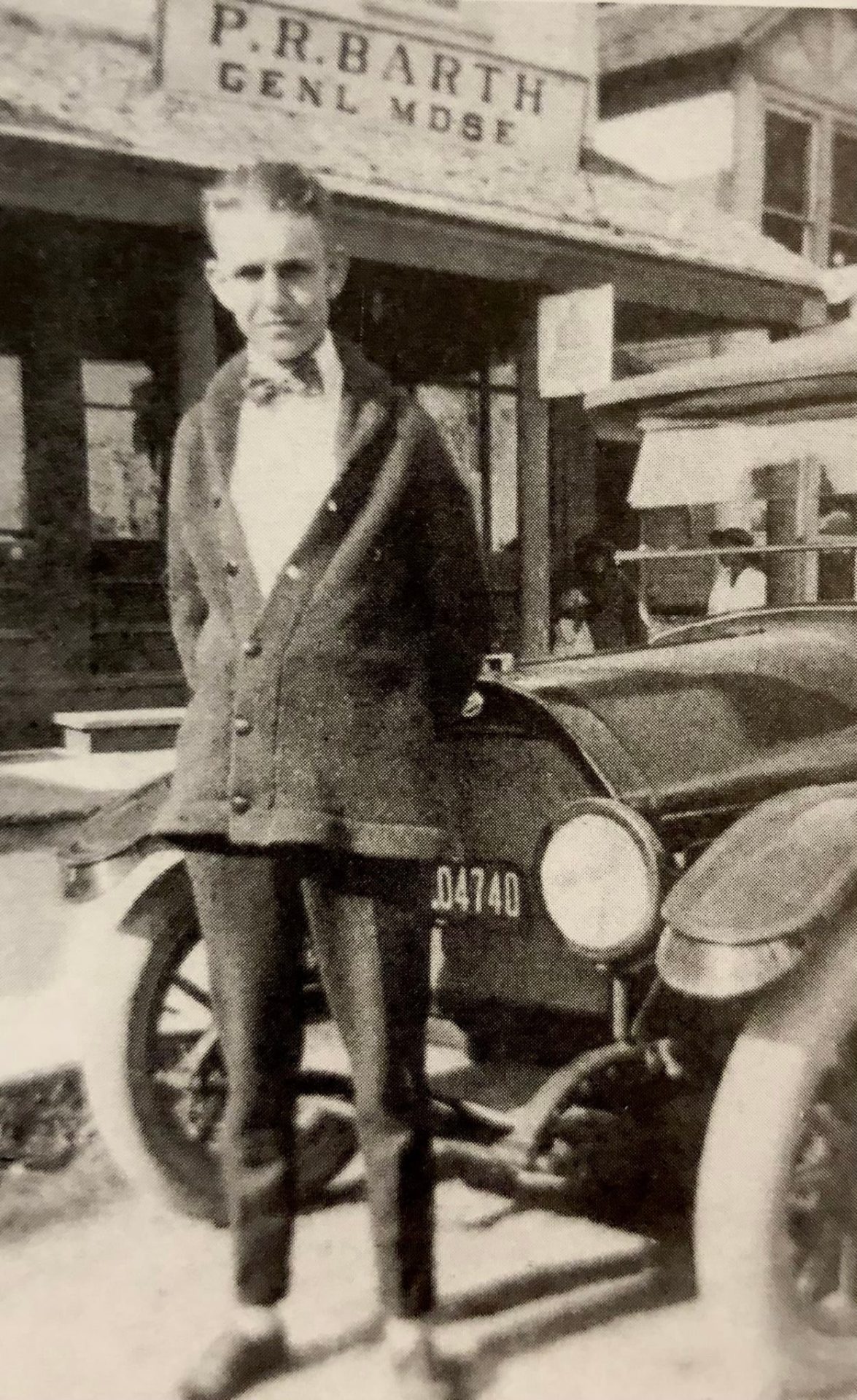
John (Ed)Scott in front of his father’s new 1912 Ford Model T ca. 1912 – Courtesy, Omena, A Place In Time and Omena Historical Society
Russ Scott remembered his dad’s first car, a 1912 Ford. After standing at the side of the road looking in amazement at the first motor vehicle pass by, a brightly painted high wheeled vehicle driven by a young man, Russ and his dad returned to work. About an hour later, that young man came walking back down the road carrying a part of the steering gear that he said had been bent while he was trying to turn in deep sand.
Russ’s father ordered their new 1912 Ford the following summer. It arrived by train to Traverse City. The drive from there to Omena was an adventure. “About three miles out of town the little Ford sank into its first deep mud hole and we learned the usefulness of a rope, ax and shovel”
Later they came to a swamp where a mile of the road had been ‘corduroyed’ with logs laid across the road and covered in dirt. Most of the dirt had washed away and no matter how slowly they moved each log gave them “a severe bouncing!” At about 3 in the morning, about twelve hours after they had begun, they arrived home, happy but covered in mud.
After a few trial runs, Russ’s father finally allowed him to ride with him. Noticing steam rising from the radiator, he unscrewed the cap. Steam “burst high in the air with a sudden ‘whoosh”. Their Irish friend, observing this after calling it a “dangerous contraption”, abandoned his cane and sprinted for his house yelling “Run for your life!”.
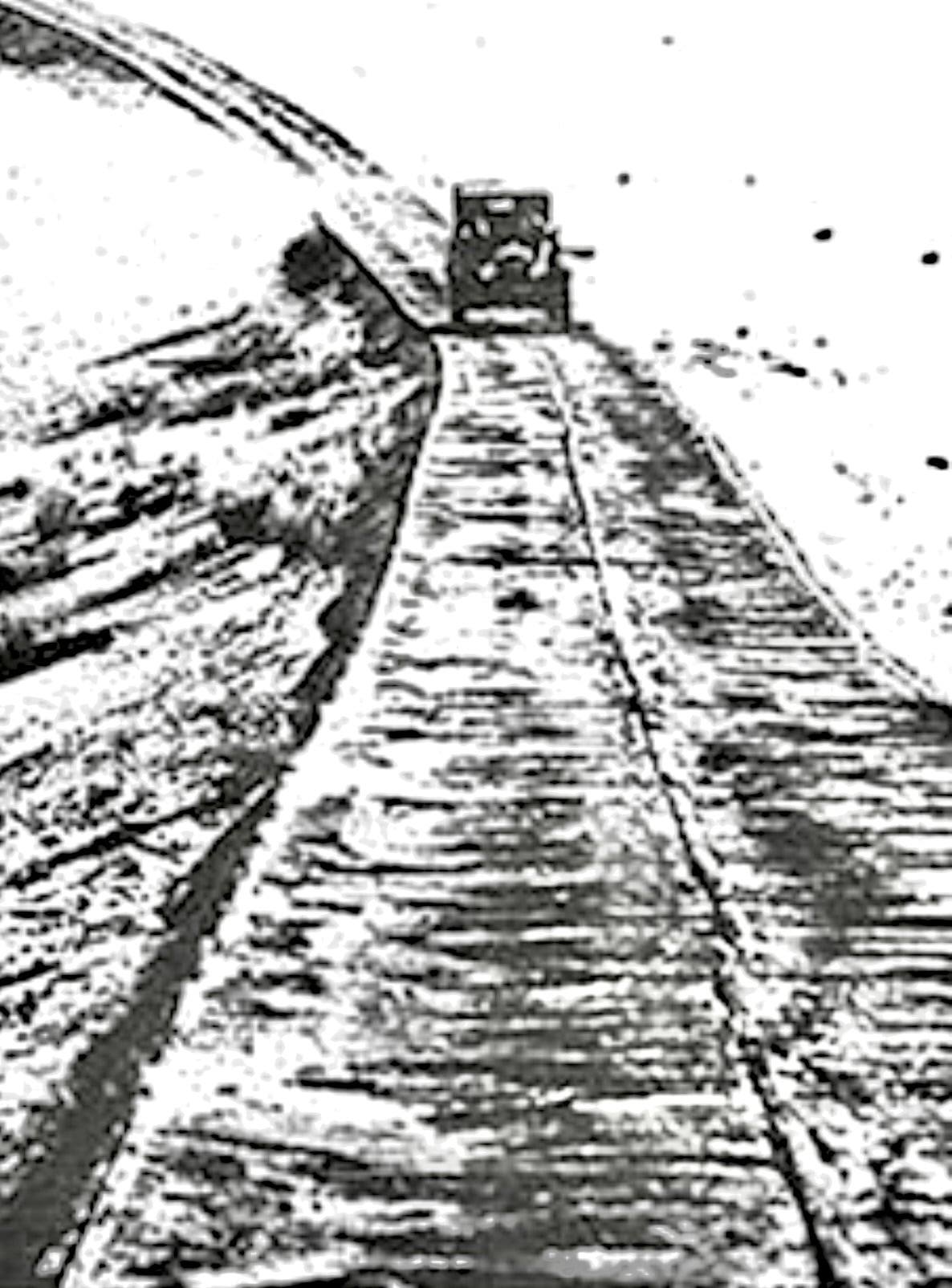
Corduroy road, a rough ride! – Courtesy Americanhistory.si.edu
Morse Family drives to Omena
Hazel Morse remembers the Morse family was among the first to drive to Omena in their automobile. Grampa Morse, a very formal gentleman “with a groomed goatee loved any excuse for a ride. He would sit in the middle of the back seat, the top of the car down like that of a buggy” and pound his cane on the floor of the car with both hands yelling to his grandson Bob, “Go faster, Go faster!” as they returned from a quick trip to the Post Office to get the mail. Everyone would leap into the ditches as they whirled by in a cloud of sand at twenty miles an hour”
American road building really took off in the 20th century as more and more cars appeared. Some roads were private initiatives, but after 1916, federal law and government money fueled much of the country’s road building. Perhaps Federal relief money will help us fix the pot holes on Omena Point Road now.
Courtesy History of Leelanau Township, Omena, a Place in Time (Omena Historical Society), Pamphlet, American history.si.ed