

There was a big mulberry tree in my back yard when I was little. My brother was too small to climb it. I loved climbing into that tree and tossing things down on my brother just to get him mad.

Watch your fingers! The wringer squeezing out the water. – Courtesy Library of Congress, War Information Photo Collection
My mom had several clothes lines in the back yard and on wash day, the sheets waved in the breeze all day. One day I climbed the mulberry tree and to my delight found big purple berries there, a bit tart for eating, but just right for throwing. Looking down I spotted my brother playing with his trucks under the flapping sheets. What fun! It took him a while to figure out where the berries were coming from that were raining down on him, and about then my mother came out of the house, spotted the purple spots on him, then her eyes turned to her nice white sheets, now stained with messy purple spots. I hid in the mulberry tree all day as I remember. It wasn’t until I had children of my own and mountains of wash to do that I realized why she had been so angry! Washing was hard work, especially when all you had was a wringer washer.
It is unclear who truly invented the first electric washing machine, but some of the first known models were produced in 1907 by Orlando B. Woodrow of the Automatic Electric Washer Company. By 1910 they were selling more than 40,000 machines a year with a corporate slogan “Everybody Works but Mother.” While these machines decreased the labor involved in getting clothes clean, they came with their own safety risks. The wringers could snag buttons, hair, or fingers and cause injury.
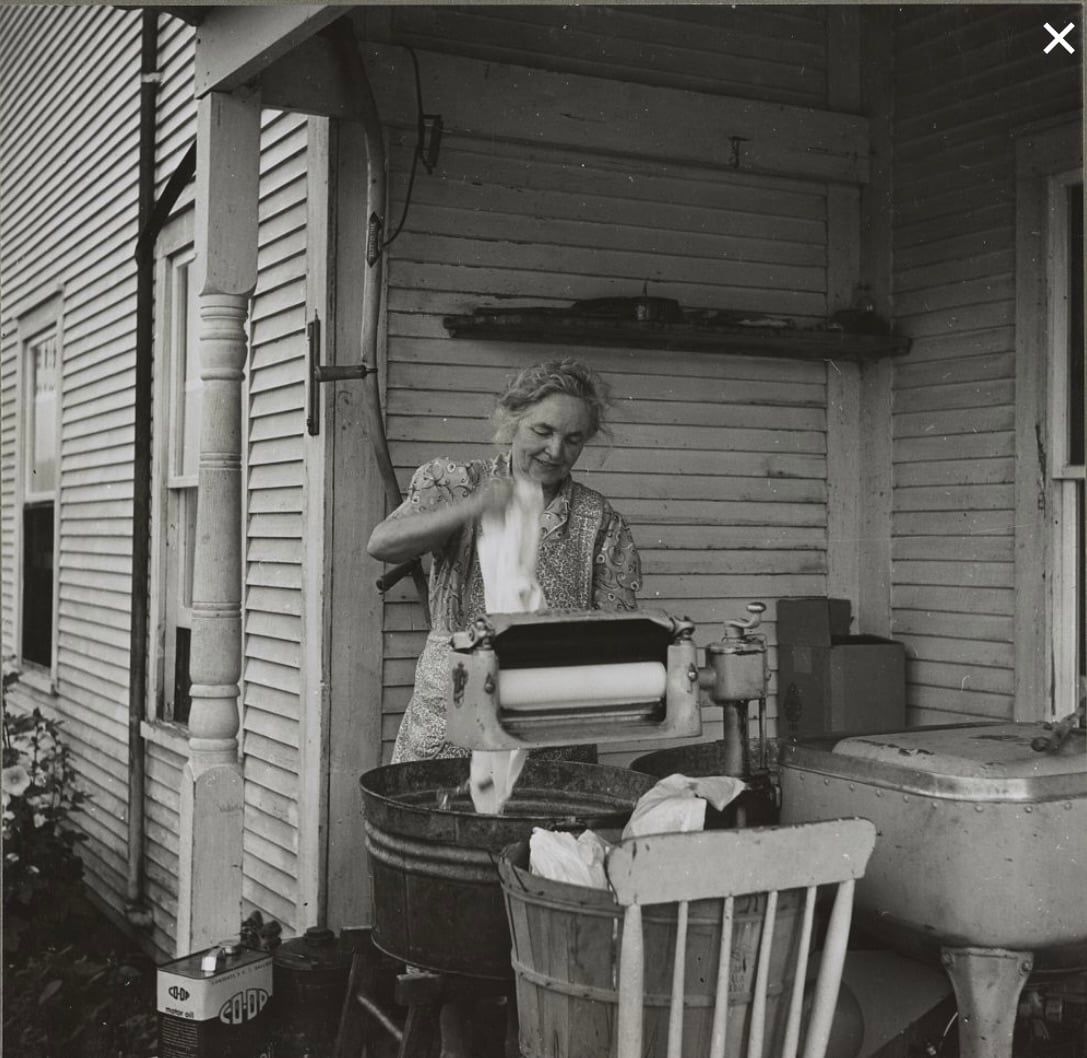
A woman doing her wash on the back porch. – Courtesy Library of Congress, War Information collection
In Omena, in the 1920’s, washing was enough of a challenge that most families sent their laundry out. However, more than one Omena cottager tackled such labors herself. Pat Kulick remembered that one summer her family brought up a wringer washing machine from Vandalia, Illinois tied to the front bumper of her grandfather’s Pierce Arrow car. After that they did the laundry on the back porch every Monday. The water for the wash had to be heated on the stove in the kitchen and hauled to the back porch, where the dirty clothes were washed, run through the wringer, and then hung on the line. The water for eight Omena Point cottages came from the bay. Calling themselves affectionately “The Omena Point Authority”, they put in pump and a five-foot storage tank on the beach. They used lake water for all their needs until as recently as 2001, when they finally all went on individual wells.
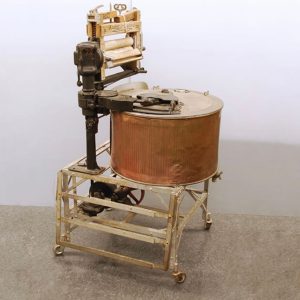
An old wringer washing machine.
courtesy USA Institute of Texas Culture, a Smithsonian affiliate.
I remember my mother washing in a wringer washer in the 40’s, passing the clothes through the wringer from the wash tub to the rinse tub. I remember with horror the one time she caught her finger in the wringer! Though it had a quick release, it hurt, and the memory of my mother’s pain lingers still.
Here is to all the mothers out there! Those with wringer washers and those who send their laundry out. Being a mother is both a joy and a trial. We celebrate you today.
Courtesy Omena, A Place in Time, Omena Historical Society, and the Smithsonian Institute of Texan Cultures.