OVPA Blog

Ole Kiersey

The Farm Horse Maude with Oles Parents

The farm horse Maude with Ole’s parents. – Courtesy Katja Sage The family had no electricity or running water in Ole’s early years. During the colder months baths were once a week. His mother poured kettles of hot water from the wood stove into a big laundry tub in the kitchen. The trips to the outhouse were cold, especially at night in the snow! They used candles and Kerosine lanterns for light. These could have been the cause of the fire which completely burned down the family home destroying all the childhood photos of Ole in 1956 while Ole was… Read More »


Putnam’s Gas Station – Harbor Bar

Putnam's Gas Station

Putnam’s Gas Station with several additions ca. 1950 Courtesy of Ed and Caroline Oberndorf and Omena Historical Society In 1938, John Putnam looked around and saw that Omena had three competing gas stations, two general stores, two churches, two schools, two cemeteries, a bookstore and an ice cream parlor. What it didn’t have, and never had was a bar. He added on to his little gas station to change that. Putnam’s was now a full featured service station and a bar with seating for about 30 people. It was a success and for the next twenty years Putnam’s was the… Read More »


Laundry Day in Omena

Clothes Line

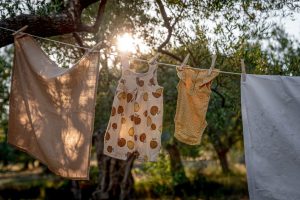
There was a big mulberry tree in my back yard when I was little. My brother was too small to climb it. I loved climbing into that tree and tossing things down on my brother just to get him mad. My mom had several clothes lines in the back yard and on wash day, the sheets waved in the breeze all day. One day I climbed the mulberry tree and to my delight found big purple berries there, a bit tart for eating, but just right for throwing. Looking down I spotted my brother playing with his trucks under the… Read More »


Omena Lights Up!

Vintage Light Bulbs

Vintage Light Bulbs Up until the early 1900’s Omena was in the dark. Arriving at a lamp-lit cottage, with hand-pump well and heat producing wood-stoves. With ice boxes for cooling food, and a thin walled out-house was a shock to early Omena visitors from the city. But improvement in basic utilities came at different times to the various homes and cottages. A Detroit firm constructed a dam in Leland sometime between 1906 and 1908, according to A History of Leelanau County. The dam provided electricity for Leland, Northport, Omena and Sutton’s Bay twenty-four hours a day, seven days a week… Read More »


Spring in Omena

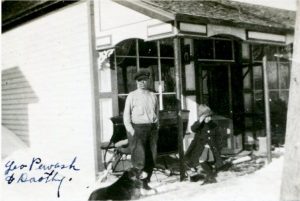
Leo Pewash and Dorothy

Leo Pewash and Dorothy with their dog standing in front of the Ice Cream Shop. Not sure if this was in April, but since he is in shirtsleeves. and Dorothy has a coat on, it might have been. Courtesy Omena Historical Society April can be hard. It may be snowing or sunny and warm. The one thing for sure is that when April comes we are all so ready for it to be spring. It was even harder in the 1800s. Food and firewood were running low, the weather was still cold, and the grey skies were affecting peoples mental… Read More »


The Automobile arrives in Omena

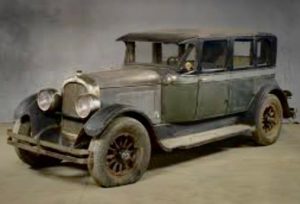
1920s era mamon touring

The coming of cars in the 1920s changed life in Omena for the old and the young. For the locals who made deliveries of ice and food, and the summer people who wanted their independence from train and boat travel. The passenger and steamers, as well as the smaller tourist vessels, gradually disappeared. Scheduled train service diminished too, as people grew to prefer the freedom that automobiles provided. Kids could get a drivers license when they were fourteen in Michigan. Driving provided a chance to expand their horizons for teens eager to leave the confines of their cottages and families…. Read More »


Omena Roads

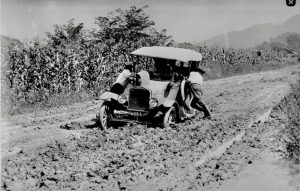
stuck in mud

Vehicle stuck in the mud – Courtesy American history.si.edu Around 1900 if the road was in excellent condition, and the team of horses were as well, a stage could make the trip to Traverse City leaving Northport at 6AM, Omena at 7, and Sutton’s Bay at 8:15 and arrive at 11AM. Sometimes there was a lot of dust making it hard to see what was coming. There were no traffic laws, but the stage driver put a little bell on the neck yoke of the horses that could be heard for a quarter of a mile so people knew he… Read More »


Sidney Keyes

The Clovers Resort

The main house at the Clovers ca. 1900 – Courtesy Omena Historical Society The other half of the story of Jeannette and Sidney….is the story of our twice postmaster, Sidney Keyes. Sidney was born in Branch County, Michigan in 1839, and was raised on a farm. In 1847 when Sidney was 8, his parents moved to Iowa where they remained for twenty one years. By 1868, when Sidney was 29 years old, he had watched his older brother William suffer the death of his wife not once but twice, (not until the age of nearly 50 did William finally marry… Read More »


Jeannette & Sidney Keyes

View from second story of Omena Post Office

The view from the second story of the Post Office: dirt roads and the Anderson Dock. – Courtesy Omena Historical Society This is a story of tragic deaths, a disabled child, land barons, and a postmaster who came and went and came again… and the Omena Post Office. In 1881 Jeannette and Hiram Ballard owned considerable timber land, at least 770 acres around Mougey and Bass Lakes. They lived in Evanston, Illinois with their 2 sons. Harry, who was mentally disabled, and Charles, who was four years younger than Harry, In Evanston in May of 1883 the father Hiram died,… Read More »


Omena Winters

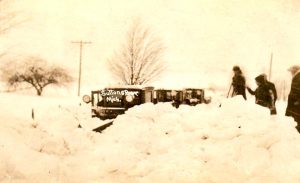
1912 Snowplow buried in Snow in Suttons Bay

1912 snowplow buried in snow in Sutton’s Bay. Courtesy worthpoint.com In the past when a snowstorm came, the romanticized view is that everyone got out their horse and cutter and sailed along with jingle bells ringing. The reality though was often very different. The invention of the snow shovel might have been a reaction to the terrible Schoolhouse Blizzard of 1888 which struck the entire Midwest. Snow and ice caused 235 fatalities. The blizzard came unexpectedly on a relatively warm day. Many people were caught unaware, including children in one-room schoolhouses. The following year, 1889, the “scrape and scoop” snow… Read More »