
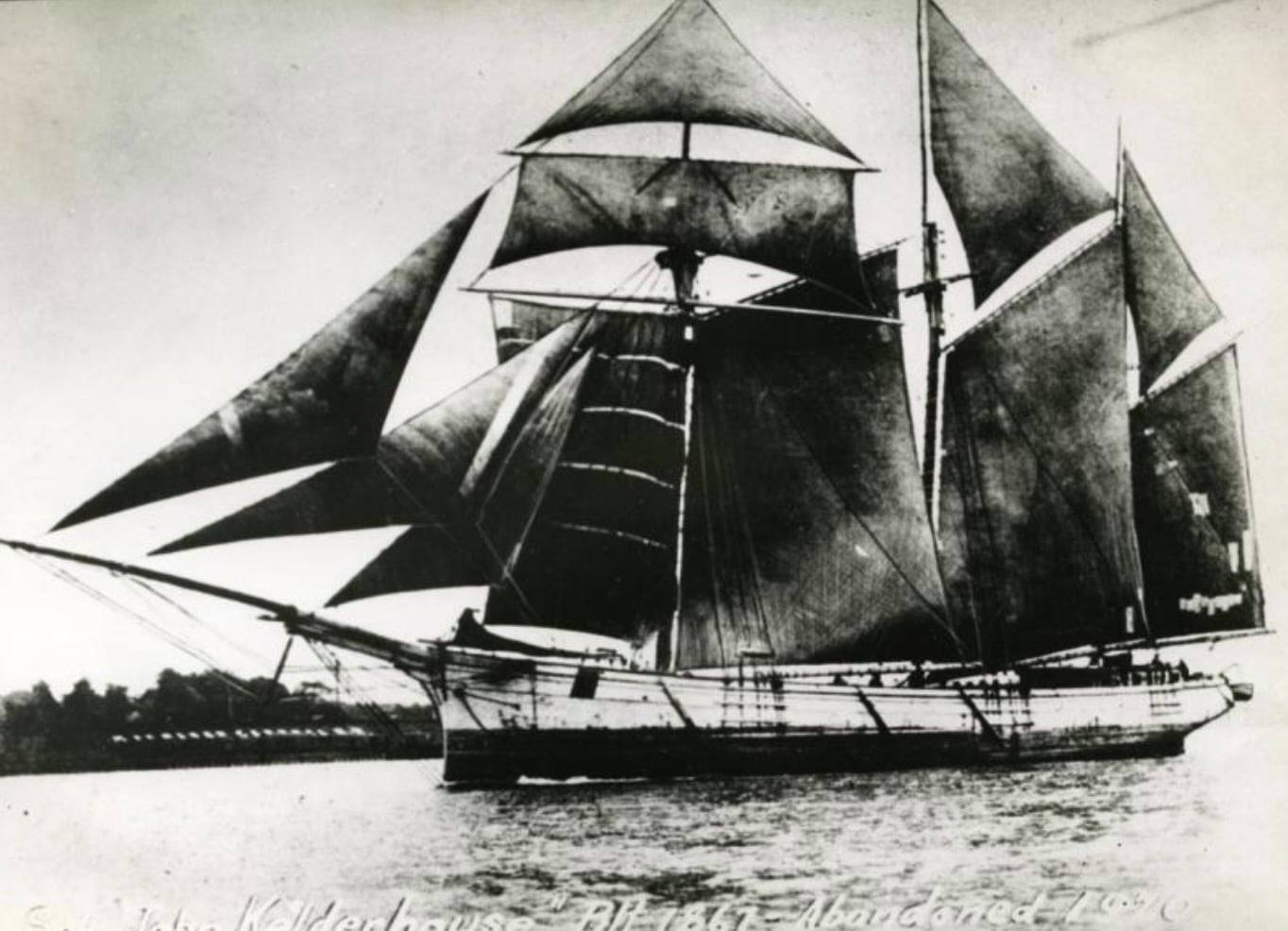
The Wanderer. The battered 40′-50′ two masted schooner with dark sails Seavey acquired in the early 1900’s. Credit: laststandzombieisland.com.
Once there were Pirates in our area according to many sources. I just finished reading Sprague’s History of Grand Traverse and Leelanau counties, a large and old book (1903). Here is how they described these freshwater pirates in the flowery language of 1903.
“Boats named “Nighthawk, Dark-cloud, Fly-By-Night, or Dread-Naught came swooping down on the unsuspecting settlers with their tan colored sails shielding them from observation at night.” “Wing-in wing they came tearing down into the bay, sailing forth in their swift winged vessels to lawless pillage at their own sweet will.” They were known as the Mormon Raiders from Beaver Island. You can feel the fear and anger in the language used to describe them.
What did they steal from these “unsuspecting settlers sleeping quietly in their beds.”? Many a cargo of “young stock, sheep, hogs, or fish and nets did these marauders bear away.” Why didn’t they have night watchmen to watch for them? They did, but generally those were the nights when the pirates went elsewhere, as very few encounters were recorded.
From Michigan.org “The Great Lakes pirates were some of the most fearsome and burly of any waters on the map. They were sometimes known as “Timber Pirates” as they stole lumber, illegal alcohol, and wild game meat. “They are reported to be Mormons from Beaver Island,” reported a New York Times article of the time. “This gang of Marauders has carried on their operations with a boldness, coolness and desperation rarely equaled in the records of highwaymen.”

Dan Seavey, sometime in the 1920’s. Credit: laststandzombieisland.com
Dan Seavey
The only man to be formally charged with piracy on the Great Lakes was a man called Roaring Dan Seavey. He had picked up a battered 40–50-foot two masted schooner somewhere around 1900 and named it The Wanderer. It had no engines, but it had a cannon, which he would use on anyone who tried to stop him. He was known for putting up fake lights that simulated a port so that incoming ships would crash on the rocks, and he could steal their cargo.
In 1908 he pirated a 40-foot schooner called the Nellie Johnson by getting her skipper drunk and tossing the crew overboard. Unable to sell her cargo of cedar posts, Seavey poked around with the pirated ship in tow for over two weeks until the Nellie Johnson swamped, and Seavey went on the run. Finally caught, Seavey was put in irons and brought to Chicago where he was tried.
It was sensational news that went coast to coast. Seavey claimed he won the Nellie Johnson in a poker game. However, charges were dropped when the owner of the ship he pirated did not appear in court and he was set free to “sail the fringes of the law for decades.” The Wanderer was destroyed by fire in 1918. It is thought Seavey went on to smuggling alcohol during prohibition, but he was never caught. Captain Daniel Seavey died in a nursing home in 1949, the last of the freshwater pirates.
Credit: Sprague’s History of Grand Traverse and Leelanau counties Michigan by Elvin L Sprague, Esq., and Mrs. George Smith; Michigan.org; and laststandonzombieisland.com